Why Keep Ducks?
Author: Lisa Steele with Fresh Eggs Daily
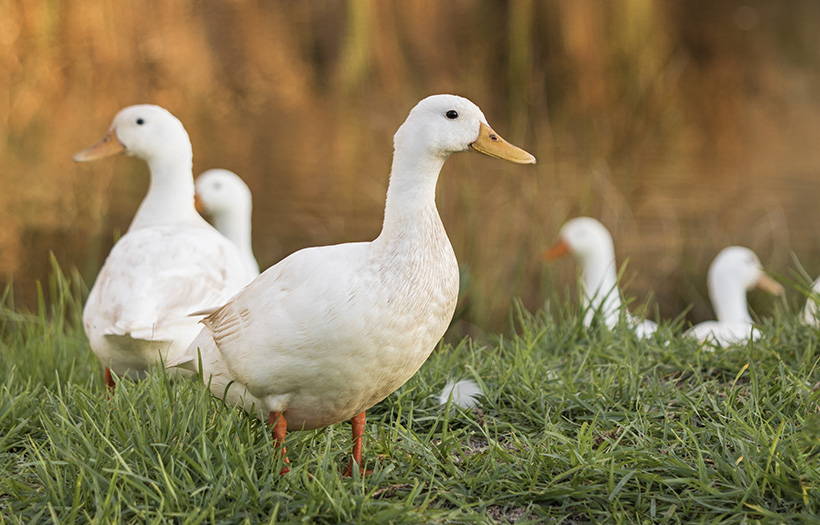
The backyard chicken keeping movement has been growing steadily over the past few years, invading residential neighborhoods, but what you may not realize is that backyard ducks are quietly growing in popularity as well. ‘Quietly’ is the key word – and may be a compelling reason why you might want to consider adding some ducks to your flock.
Table of Contents
Key Takeaways
- Backyard ducks are becoming more popular due to their quieter nature compared to chickens.
- Ducks are healthier, more resilient to diseases, and lay eggs year-round without supplemental light.
- Duck eggs are superior for baking, richer in protein and fat, and have longer shelf lives.
- Ducks cause less lawn damage and provide pest control by foraging for grubs and larvae.
- Consider adding ducks to your flock for their unique benefits and minimal care requirements.
Why Backyard Ducks are Gaining Popularity
Unlike a crowing rooster which can be annoying to neighbors, male ducks, known as drakes, make hardly any sound at all. The females do quack when frightened or excited, but don’t sing an ‘egg song’ like hens do. Ducks adhere to a far less strict pecking order than chickens and noisy squabbles are rare. On the whole, ducks are much quieter than chickens.
Another benefit: ducks tend to be healthier than chickens, and are not not especially susceptible to Marek’s or coccidiosis, two common pathogens that target chickens. Ducks are also more cold-hardy due to an extra layer of fat and waterproof feathers, as well as more able to handle heat by splashing around in a pool or tub of water on hot days.
Ducks are excellent layers and will generally lay year round even without supplemental light in the winter. Their eggs are higher in fat and protein but as a result are superior for baking, making baked goods richer and rise higher. Duck eggs also last longer than chicken eggs due to their thicker shells and membranes and are less apt to break, which can be a plus if you have small children help you collect eggs. Ducks are less apt to go broody than chickens, which is nice if you are raising poultry purely to eat their eggs and aren’t interested in hatching any.
The Surprising Benefits of Raising Ducks
Ducks aren’t nearly as hard on lawns as are chickens. They don’t scratch up grass by the roots or nibble it down to the dirt.
While they will trample your lawn a bit and dig quarter-sized holes looking for grubs, worms and bug larvae, you won’t be left with a dirt wasteland like you would raising chickens. Consider the holes beneficial lawn aeration.
Ready to Add Ducks to Your Flock? Here’s Why You Should
Whether you raise chickens already and are thinking of expanding your flock or are new to backyard poultry keeping, why not consider ducks?
- Ducks are quieter than chickens, making them ideal for urban or suburban settings.
- They’re more resilient to common poultry diseases like Marek’s and coccidiosis.
- Duck eggs are excellent for baking, with higher fat and protein content.
- Ducks lay consistently year-round, even without supplemental lighting.
- They’re cold- and heat-hardy, thanks to their waterproof feathers and love of water.
- Less lawn damage—ducks don’t scratch up grass like chickens do.
- Lower broodiness means fewer interruptions in egg production.
- Great for pest control, as ducks love to forage for grubs and larvae.
For additional insights from Lisa Steele on raising ducks, feel free to visit her on Facebook or her blog.